The Blog
Simple, clear, and helpful articles to better understand language development and support your child every day.
Child Bilingualism: Myths, Realities, and Speech Therapist Advice
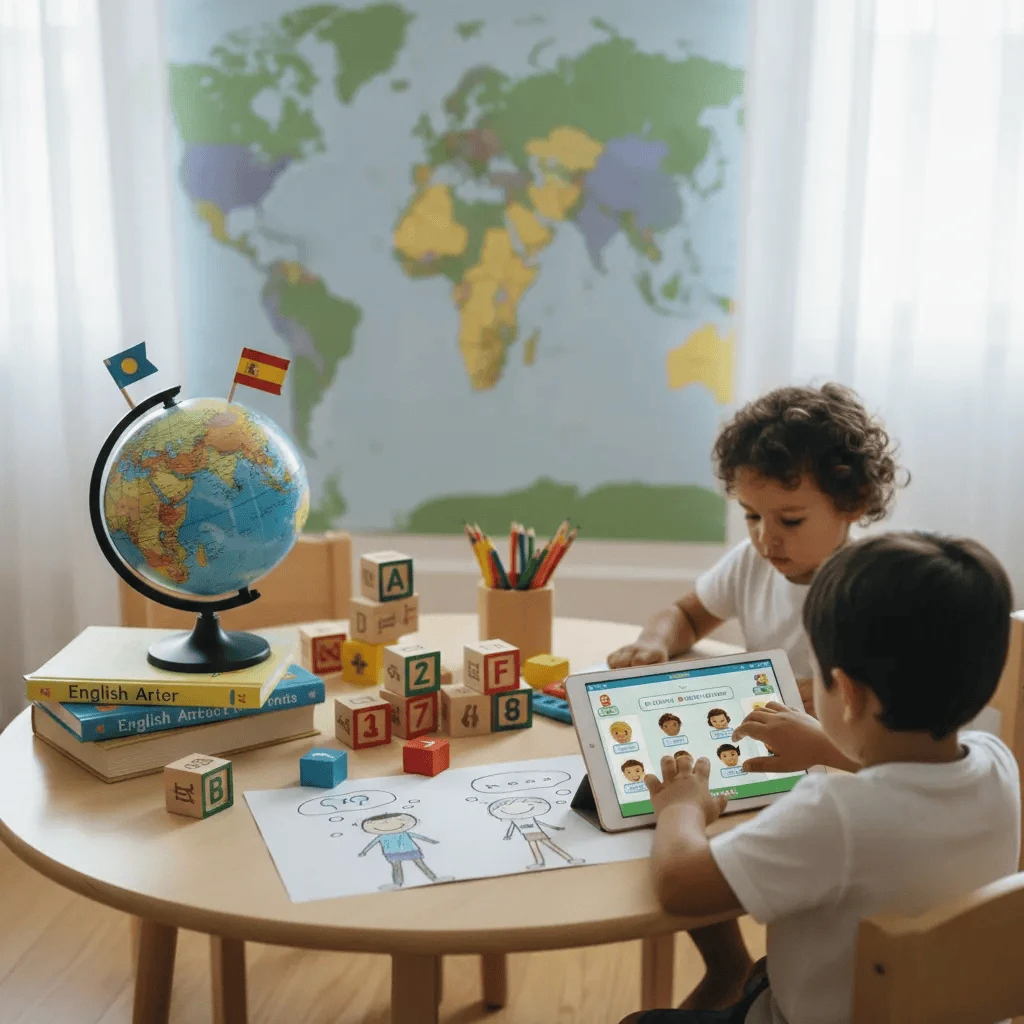
How children learn multiple languages and what parents need to know
1. Bilingualism, a treasure from an early age
A child growing up with two (or more) languages develops great cognitive flexibility. Contrary to popular belief, bilingualism does not cause language delay: it can sometimes slightly slow acquisition in each language… but this slowdown is normal, temporary, and has no long-term consequences.
The brain of a multilingual child is constantly selecting the correct language, which strengthens their abilities:
- attention
- cognitive flexibility
- memory
- reasoning
- ability to learn other languages later
2. How does a child learn multiple languages?
A child can learn multiple languages in different contexts:
🔹 One language at home, one language at school
This is the most common situation: for example, Arabic at home, French at school.
🔹 Two languages at home
If both parents speak different languages.
🔹 One family language + several environmental languages
Very common case in Morocco: Arabic, Darija, French, sometimes English.
In all cases, the child builds a single global linguistic system and then gradually separates it.
3. What is normal in a bilingual child
- small confusions between languages
- mixing words within the same sentence
- switching from one language to another depending on the situation
- one language stronger than the other depending on the context
All of this is typical, normal, and nothing to worry about.
4. When to consult?
You can request an evaluation if your child:
- speaks very little in all languages
- does not form sentences after 3 years old
- is difficult to understand, even by close family
- shows significant delay compared to expected development
- does not progress in any of their languages
Bilingualism is never the cause of a disorder, but it can reveal an underlying difficulty earlier.
5. How to support a bilingual child?
- Speak to them in the language you are most comfortable with
- Accept and encourage language mixing (it's normal!)
- Provide stories, songs, and interactions in both languages
- Value all the family's languages
- Let each language develop at its own pace
Conclusion
Bilingualism is a strength. With a rich, warm, and varied environment, the child naturally develops skills in each of their languages. And if in doubt, a speech therapy evaluation can ensure everything is progressing harmoniously.